

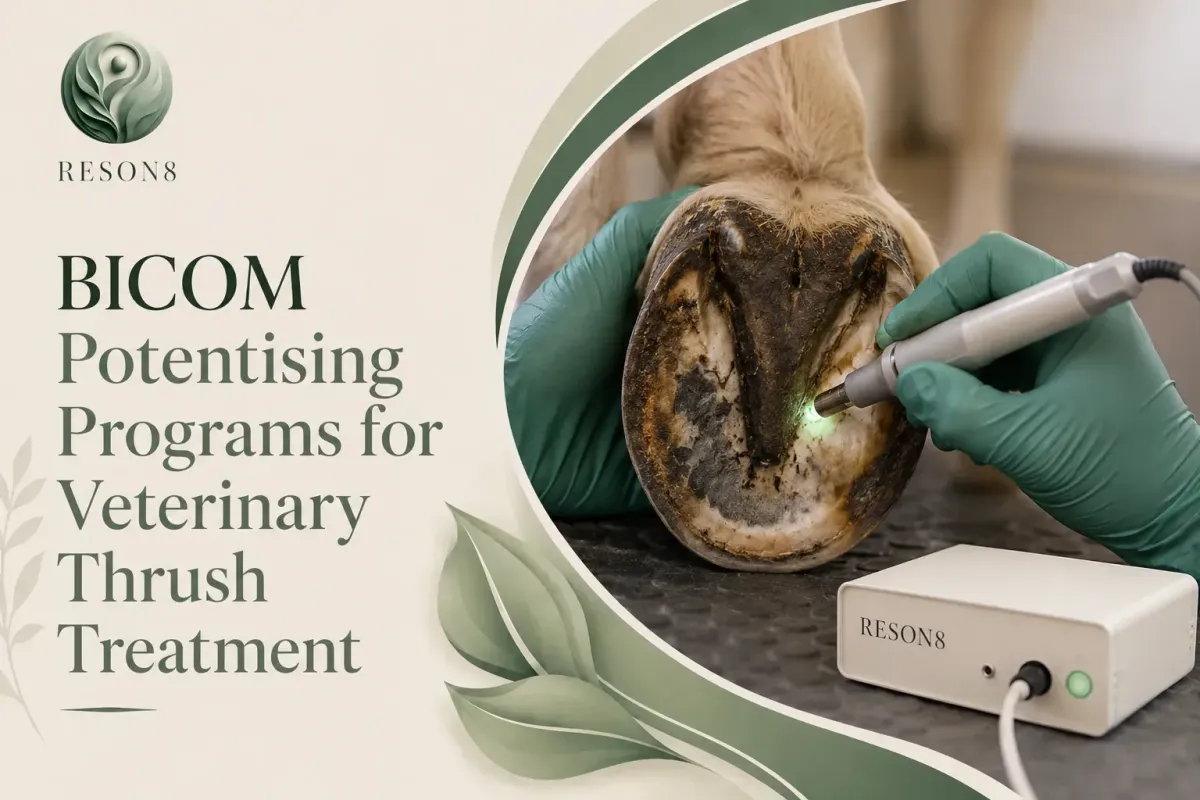
BICOM Potentising Programs for Veterinary Thrush Treatment
BICOM Potentising Programs in Veterinary Practice: Treating Thrush and Infections
Veterinary practitioners continually seek effective complementary approaches to support animal health, particularly when dealing with persistent conditions like thrush and wound infections. BICOM potentising programs offer a unique bioenergetic tool that can complement traditional veterinary care through frequency-based information transfer.
This approach isn't about replacing conventional treatment. Instead, it provides supportive follow-up care that may help animals maintain progress after initial interventions.
Understanding BICOM Potentising Programs in Veterinary Settings
The BICOM device includes a specialized category, Category No. 8, dedicated to potentising applications. However, the term "potentising" can be somewhat misleading.
Unlike traditional homeopathic potentization, which involves both dilution and dynamization through succussion, the potentising module in BICOM therapy works differently. It modifies either the gains at the same frequency or changes both frequency and gain parameters.
This means practitioners cannot create homeopathic remedies through this module. What it does offer is a method for transferring frequency information that may support ongoing treatment protocols.
For veterinary applications, this becomes particularly relevant when dealing with conditions that benefit from sustained supportive care, like thrush in horses or persistent wound infections in various animal species.
The Three Therapy Types in BICOM Potentising Programs
Understanding which therapy type to use determines the effectiveness of your approach. Each serves distinct purposes in veterinary practice.
H+Di Therapy Type for Animal Feed and Biological Materials
The H+Di therapy type operates at a fixed frequency of 52kHz. This frequency aligns with programs used for information transmission in allergy therapy and general regulation.
In veterinary practice, this setting works well for:
Animal feed sensitivities that persist after initial allergy treatment
Body secretions and excretions for autologous-style treatments
Follow-up support for animals showing minor lingering symptoms
The process involves placing the substance, whether animal feed or biological material, in the input cup. Programs ranging from D3 (10.0) to D1000 (22.0) are then tested for resonance.
When resonance appears at specific potency levels, practitioners can either conduct immediate short therapy sessions or transfer the frequency information to storage media like drops, oils, or chips.
Ai Therapy Type for Infection and Pathogen Information
This is where BICOM potentising programs become particularly valuable for thrush and infection management.
The Ai therapy type specifically addresses stressful information from:
Bacteria and fungal organisms
Viruses affecting animal health
Parasitic influences
Environmental contaminants
Wound-related pathogens
For infected wounds in any animal, practitioners can use wound swabs placed directly in the input cup. With equine thrush, a common fungal and bacterial infection affecting horse hooves, material from the affected area can be used similarly.
The same applies to mud fever in horses, where bacterial infections persist in the lower limbs. By using native samples from these conditions, practitioners create treatment protocols tailored to the specific pathogenic information affecting that individual animal.
A Therapy Type for Nutritional and Harmonizing Support
The third option focuses on harmonizing information through:
Phytotherapeutic substances
Enzymes and minerals
Vitamins and dietary supplements
Stabilizing ampoules from CTT or STT test kits
While less directly applicable to acute infections, this therapy type supports overall immune function and recovery. It can complement infection treatment by strengthening the animal's general resilience.
Practical Application for Equine Thrush Treatment
Thrush remains one of the most common hoof conditions in horses. It involves bacterial and fungal infection of the frog tissue, often producing the characteristic black discharge and foul odor.
Traditional treatment includes topical antimicrobials, improved hoof hygiene, and environmental management. BICOM potentising programs can provide additional support through frequency information transfer.
Sample Collection and Testing Protocol
The veterinary practitioner collects a small sample of thrush material from the affected hoof. This native substance contains the specific pathogenic information relevant to that horse's infection.
The sample goes into the input cup of the BICOM device. Using the Ai therapy type (therapy type 2), the practitioner tests through the potency range from D3 to D1000.
Resonance at particular potency levels indicates which frequencies may support the animal's healing response. Multiple resonances may occur, requiring systematic testing to determine priority.
Creating Support Remedies
Once resonance points are identified, the practitioner has several options for remedy creation.
Drops or globules work well because they allow individualized dosing. The frequency information transfers to the carrier medium while the trash material remains in the input cup.
For horses, drops can be administered orally or applied to feed. The dosing frequency depends on the potency level found during testing.
Potencies below D30 typically support daily application. A D30 resonance suggests use every third day, while D200 indicates weekly application, and D1000 monthly use.
This graduated approach prevents over-treatment while maintaining consistent supportive frequency exposure.
Integration with Conventional Care
BICOM potentising programs work best as part of comprehensive thrush management, not as an isolated treatment.
Concurrent measures remain essential:
Regular hoof cleaning and picking
Appropriate topical antimicrobial application
Environmental improvements to reduce moisture
Nutritional support for hoof health
Professional farrier care
The frequency-based support complements these physical interventions. It doesn't replace the need for proper hoof hygiene or treatment of underlying predisposing factors.
Managing Wound Infections in Small and Large Animals
Beyond thrush, BICOM potentising programs support the treatment of various infected wounds across animal species.
Wound Swab Protocol
When an animal presents with an infected wound, whether a surgical site infection, abscess, or traumatic wound, a sterile swab can collect pathogenic material.
This swab provides native substance containing the specific bacterial or mixed infection affecting that animal. Placing it in the input cup allows testing with the Ai therapy type.
The approach mirrors the thrush treatment but applies to any infected tissue. Cats with bite abscesses, dogs with hot spots showing secondary infection, or livestock with wound complications can all potentially benefit from this supportive protocol.
Mud Fever in Horses
Mud fever (pastern dermatitis) involves bacterial infection of the lower limb, often complicated by environmental moisture and mud exposure. It causes painful scabbing, swelling, and lameness.
Material from active mud fever lesions contains the pathogenic information specific to that case. Using BICOM potentising programs with this material follows the same Ai therapy type protocol described for thrush.
The frequency information can be transferred to oils for topical application or drops for internal support. Many practitioners find oils particularly useful for conditions like mud fever, as they can apply directly to affected areas while also providing the frequency information systemically.
Application frequency follows the same potency-based guidelines: lower potencies daily, higher potencies at greater intervals.
Important Considerations and Limitations
Transparency about what BICOM potentising programs can and cannot do matters greatly in veterinary practice.
What These Programs Don't Do
The potentising module cannot create true homeopathic remedies. It lacks the dilution and dynamization processes essential to homeopathic preparation.
If homeopathic remedies already exist for a condition, practitioners should use those in their original form rather than attempting to "potentize" them further through the BICOM device.
The documents specifically caution against using ampoules containing miasm (hereditary toxin) information with potentising programs. These already contain multiple homeopathic potencies and shouldn't be administered daily.
Appropriate Expectations
BICOM therapy represents a complementary modality. It doesn't eliminate the need for:
Proper veterinary diagnosis
Indicated conventional treatment
Management of underlying causes
Environmental and husbandry improvements
Nutritional optimization
The frequency-based support works best when integrated into comprehensive care plans. It shouldn't be positioned as the primary treatment for serious infections requiring antibiotics or other medical intervention.
Storage Medium Selection for Veterinary Use
Choosing the right carrier for frequency information affects practical application in animal care.
Drops and Globules
These offer the most flexibility for individual dosing. Animals accept them readily when added to feed or water.
The ability to adjust drop quantities makes them ideal when treating animals of different sizes or when fine-tuning dosage based on response.
Oils for Topical and Oral Use
Oils serve dual purposes in veterinary practice. They can be applied topically to affected areas like thrush-infected hooves or mud fever lesions.
They're also suitable for oral administration, particularly with horses and livestock that readily accept oil-based supplements.
The application frequency for oils matches that of drops, determined by the potency level showing resonance during testing.
Chips for Information Transfer
While chips can store frequency information, they prove less suitable for veterinary aftercare requiring variable dosing intervals.
The fixed nature of chip programming doesn't allow the flexibility needed when working with different potency levels and their corresponding application frequencies.
Professional Implementation in Your Practice
For veterinary practitioners considering adding BICOM potentising programs to their service offerings, certain factors ensure optimal results.
Training through manufacturer-approved certification programs provides an essential understanding of proper protocols. The therapy devices available through professional suppliers come with support for learning appropriate application methods.
Documentation of testing protocols, resonance findings, and animal responses helps refine your approach over time. Tracking which potency levels correlate with clinical improvement guides future case management.
Communication with animal owners about realistic expectations prevents misunderstandings. Clear explanation that this represents supportive frequency-based care, not a replacement for necessary medical treatment, maintains appropriate therapeutic relationships.
The Role of Frequency-Based Support in Modern Veterinary Care
Bioresonance therapy continues evolving as practitioners develop more refined application protocols. The potentising module represents one tool among many in the comprehensive BICOM system.
For conditions like thrush and wound infections, where persistent pathogenic presence challenges complete resolution, frequency-based information transfer offers an additional support avenue.
It doesn't work through pharmaceutical mechanisms. Instead, it operates on the principle that frequency information may influence biological systems in ways that complement physical interventions.
The growing network of veterinarians incorporating BICOM therapy into practice demonstrates increasing interest in these complementary approaches. Sharing protocols and outcomes within this professional community helps establish best practices.
Moving Forward with BICOM Potentising Programs
Veterinary practitioners interested in this modality should approach it with both openness and appropriate scientific caution.
The technology offers genuine possibilities for supporting animal health through frequency-based methods. However, it requires proper training, realistic expectations, and integration within evidence-based veterinary medicine frameworks.
For thrush, wound infections, and similar conditions, BICOM potentising programs provide one more tool for supporting animals through recovery and maintaining health after initial treatment.
When applied thoughtfully by trained practitioners, it becomes part of the holistic approach that many animal owners increasingly seek for their companions and working animals.
Conclusion
BICOM potentising programs represent a valuable addition to the veterinary toolkit when used appropriately within comprehensive treatment plans. While these programs cannot replace conventional veterinary care or create true homeopathic remedies, they offer meaningful supportive therapy for persistent conditions like thrush and wound infections.
The three therapy types, H+Di for feed sensitivities and biological materials, Ai for pathogenic information, and A for nutritional support, provide flexibility in addressing different aspects of animal health. Success depends on proper training, realistic expectations, and integration with evidence-based veterinary medicine.
As bioresonance therapy continues to gain recognition in veterinary practice, BICOM potentising programs stand out for their practical application in everyday clinical settings. They bridge the gap between initial treatment and complete recovery, offering animals sustained support during the healing process.
For practitioners ready to expand their therapeutic offerings, understanding these frequency-based protocols opens new possibilities for supporting animal health. The key lies in viewing them not as standalone solutions but as complementary tools that enhance overall patient care.
Ready to integrate frequency-based support into your veterinary practice? Explore professional BICOM therapy devices and discover how this technology can enhance the care you provide to your animal patients.
Frequently Asked Questions
Can BICOM potentising programs replace antibiotics for treating thrush?
No, BICOM potentising programs are supportive tools that complement conventional treatment, not replacements for necessary veterinary medications. Severe infections requiring antibiotics should always receive appropriate pharmaceutical intervention alongside any complementary therapies.
Which therapy type should I use for equine thrush treatment?
The Ai therapy type (therapy type 2) is specifically designed for bacterial, fungal, and viral pathogen information. This makes it the appropriate choice for thrush, which involves mixed bacterial and fungal infection of the hoof.
How long does it take to see results with BICOM potentising programs?
Results vary depending on the condition's severity, the animal's overall health, and concurrent conventional treatment. Most practitioners reassess after one to two weeks of using the identified potency level to determine if adjustment is needed.
Can I use the same remedy drops for multiple animals with thrush?
Each remedy is created from the specific pathogenic material of an individual animal. While you could use the same drops for multiple animals, individualized remedies based on each animal's sample typically provide more targeted support.
What's the difference between drops and oils for veterinary use?
Both carry frequency information effectively. Drops offer easier dosing adjustment and oral administration, while oils provide options for both topical application to affected areas and internal use. Choice depends on the condition and animal preference.
How often should I apply remedies created with BICOM potentising programs?
Application frequency depends on the potency level showing resonance: potencies below D30 can be applied daily, D30 every third day, D200 weekly, and D1000 monthly. This prevents over-treatment while maintaining consistent support.
Do I need special training to use BICOM potentising programs?
Yes, proper training through manufacturer-approved certification ensures you understand testing protocols, resonance interpretation, and appropriate remedy creation. This training is essential for safe and effective application in veterinary practice.
Can BICOM potentising programs treat other conditions besides thrush and infections?
Yes, the three therapy types address various conditions, including food allergies, environmental sensitivities, and nutritional support needs. However, each condition requires appropriate therapy type selection and protocol application.
